AIM: TO LEARN ABOUT WATER ON EARTH.
Definition:

Scientific words:
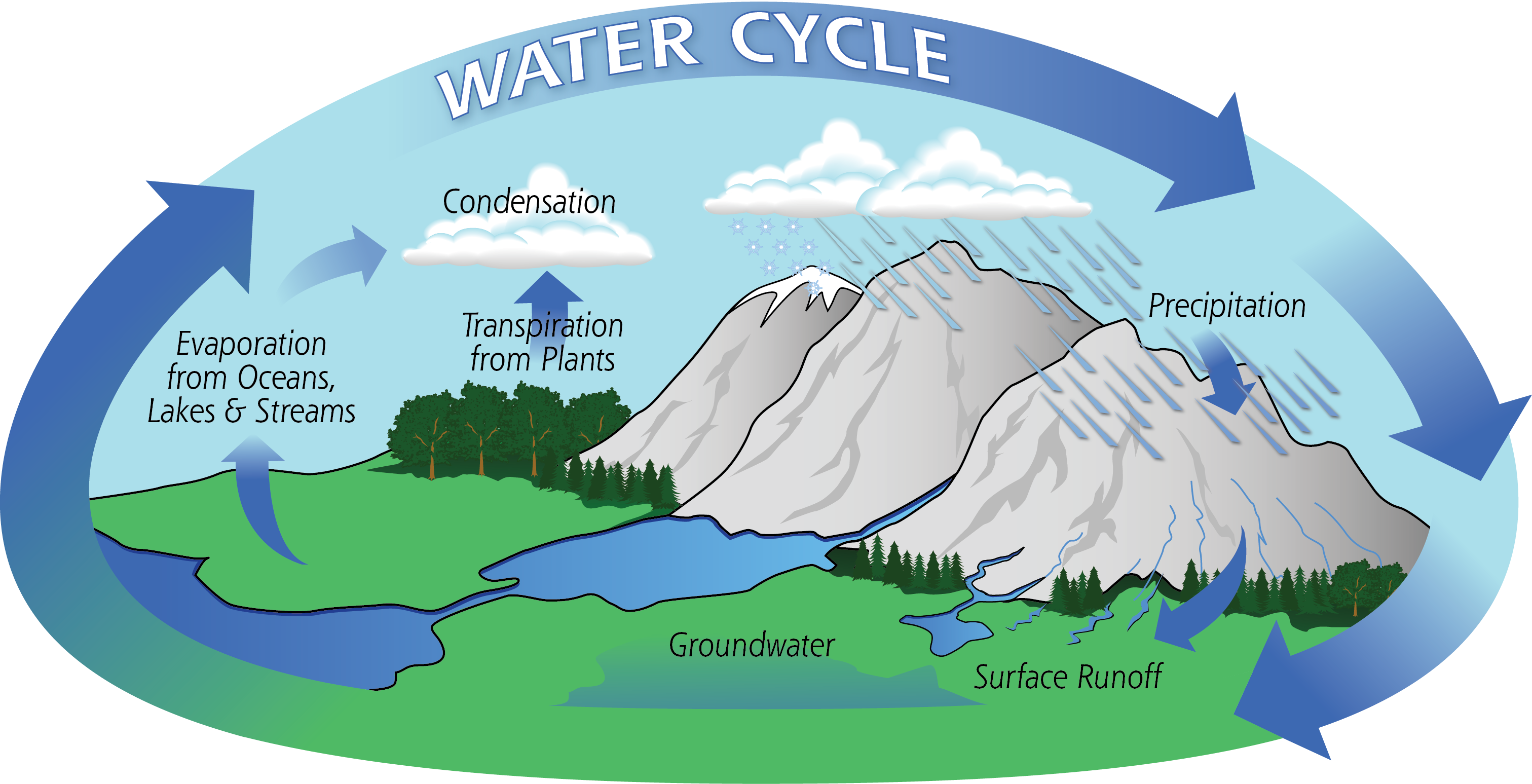
- Evaporation. When water is heated by radiant energy it turns into water vapor.
- Transpiration. Evaporation from plants.
- Condensation. When water vapor cools, molecules join together and form clouds.
- Precipitation. When clouds get heavy the waters falls as rain, sleet, hail, or snow.
- Acidification: the action or process of making or becoming acidic.
AIM: TO LEARN ABOUT WATER ON EARTH.
Definition:
Scientific words:
- Evaporation. When water is heated by radiant energy it turns into water vapor.
- Transpiration. Evaporation from plants.
- Condensation. When water vapor cools, molecules join together and form clouds.
- Precipitation. When clouds get heavy the waters falls as rain, sleet, hail, or snow.
- Acidification: the action or process of making or becoming acidic.
THE WATER CYCLE SONG
THE WATER CYCLE EXPERIMENT
Bag 1: Normal Water cycle
Bag 2: Water cycle with CO2 added: like Oceans in climate change
Bag 3: Water cycle with ice added: like Antarctica in climate change
Purpose
The purpose is to duplicate the process of the water cycle under controlled conditions
Materials
- A4 plastic ziplock bags x2
- 50ml of water
- Blue food colouring
- Permanent marker
- 50ml of Soda water
- 1 t Baking soda
- Litmus paper
- Double sided tape.
Procedures
- Get your materials.
- Draw a picture of the water cycle on the plastic bag.
- Label the parts of the water cycle.
- Add 50ml of water into the plastic bag.
- Add a few drops of blue food colouring into the water.
- Zip up the bag tightly.
- Tape the bag to a window.
- Get your other bag.
- Repeat the drawing steps on your second bag.
- Add 50ml of soda water.
- Add one teaspoon of baking soda.
- Zip up the bag but leaving a small gap.
- Put a strip of litmus paper in, leaving it half in the bag and half out.
- Make sure the zip lock is closed and securing the paper.
- Tape the bag to the window next to the other bag.
- Wait for a few days (maybe weeks)
- Watch as the condensation builds up.
.
Findings:
The Water Cycle
|
Acid Water Cycle
| |
Does it cycle?
| Yes | Yes |
Amount of Water
| 1 | 2 |
Acidity
| 0 | 1 |
Key: Water and acidity amount: 0 = none
1 = small
2 = large
Comments:
- The water cycle did cycle, there was a small amount of water and no acidity.
- The acid water cycle did cycle and there was a large amount of water and a small amount of acidity.
Conclusion
If you follow these steps correctly you will be able to do the experiment successfully and replicate the water cycle process in controlled conditions
